Remember the first time you saw a junior developer fix a bug in a shared library, only to realize they had to open three separate pull requests, wait for three different CI pipelines, and coordinate three independent releases just to change a single string? It felt like the tooling was actively rooting against your productivity. In that moment, the monorepo does not just look like a technical choice; it looks like a competitive necessity.
The debate around monorepos is often framed as a binary "yes or no" question, but for growing engineering organizations, it is really a question of timing. When implemented correctly, a monorepo can act as a high-speed engine for growth, turning a fragmented workflow into a unified system. However, the benefits become hard to ignore only when the organization reaches a level of complexity where the cost of isolation exceeds the cost of centralization.
The Scaling Inflection Point
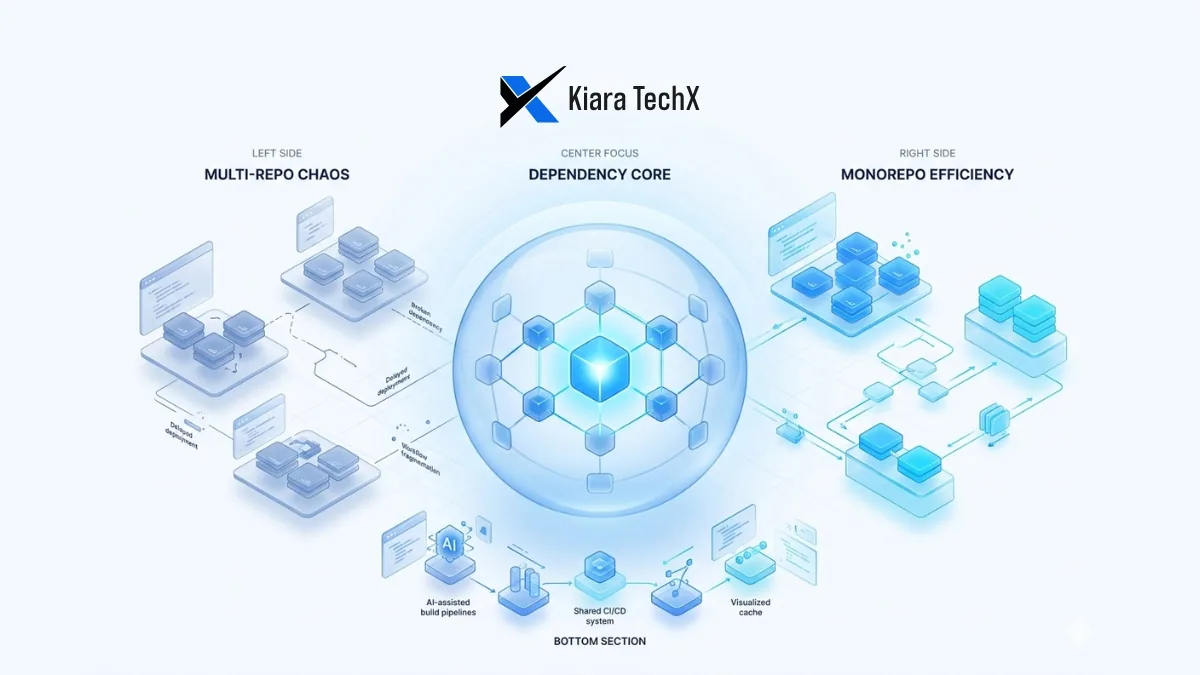
No team moves to a monorepo without a vision for efficiency. As teams expand, the friction of shared code drifting out of sync becomes a significant bottleneck. You might have a UI component library in one repo and several different apps in others. In a traditional multi-repo setup, keeping these in sync is often a manual, tedious chore that slows down every release cycle.
A monorepo can shine by ensuring that every change is atomic. If you update a core API contract, you can refactor every consumer of that API in the same commit. This reduces the risk of version mismatch nightmares and ensures that the codebase remains a single source of truth. For large-scale organizations, this centralized approach encourages transparency, where engineers can contribute across the stack without jumping through administrative or repository-based hurdles.
However, it is important to acknowledge that for a solo developer or a small startup, a monorepo might be overkill. The setup overhead and the initial configuration can actually create more friction than they solve in the early days. The goal is to adopt the pattern when your team is large enough to feel the pain of fragmentation, but disciplined enough to handle a unified environment.
Where Theory Meets the Build Pipeline
The primary hurdle most teams face when scaling a monorepo is the sheer volume of code. Without proper caching and incremental builds, the system can feel heavy. This is why the right infrastructure is what makes a monorepo feel effortless. When your build tools are optimized, you get the best of both worlds: the visibility of a giant codebase with the speed of a microservice.
To keep velocity high, successful teams lean on advanced build systems like Nx, Turborepo, or Bazel. These tools understand the dependency graph, ensuring that only the affected projects are tested and rebuilt. When this layer is working correctly, the developer experience feels seamless. You get the benefit of seeing the entire codebase while maintaining the build speed of a much smaller project.
Managing this at scale also requires a shift in how we think about ownership. While a monorepo makes it easy to share code, it requires discipline to ensure that shared modules are properly maintained. Using a robust configuration for code ownership ensures that while anyone can propose a change, the domain experts still maintain the final say over their specific modules. This balance of open contribution and expert oversight is what allows a monorepo to remain healthy as it grows.
The AI Advantage: Context as a Force Multiplier
In 2026, we have to talk about how AI is fundamentally changing the way we interact with codebases. We are no longer writing every line by hand; we are collaborating with AI agents that can generate and refactor systems in seconds. This is where the monorepo offers a distinct advantage for larger teams.
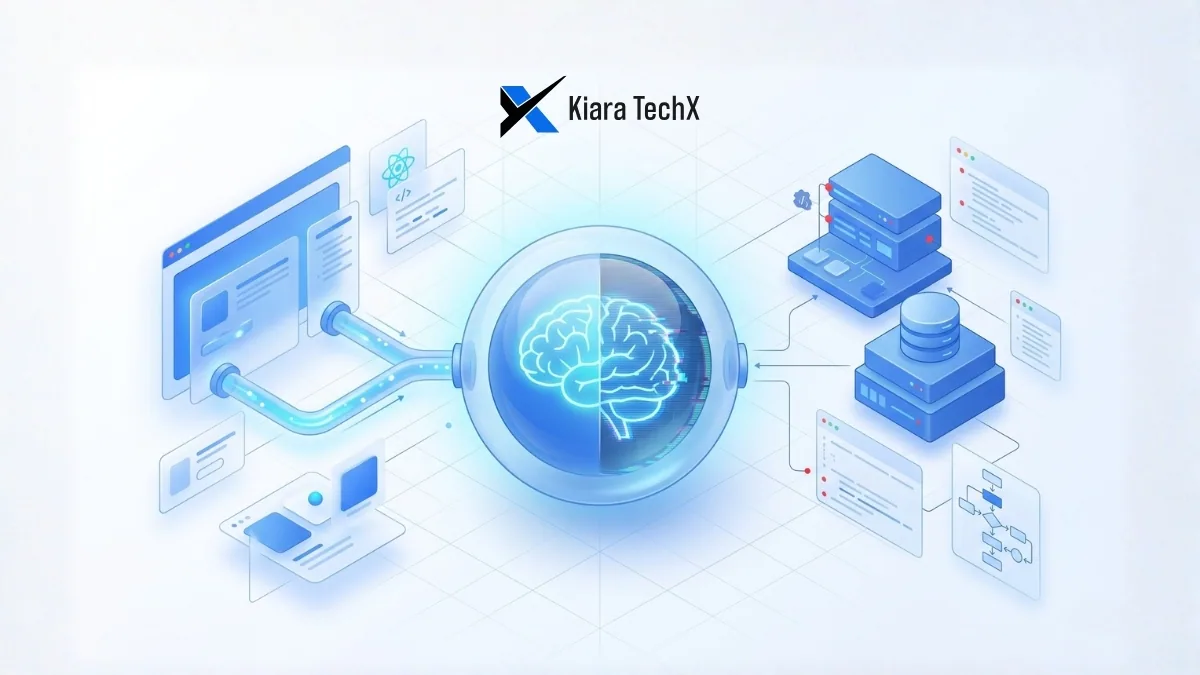
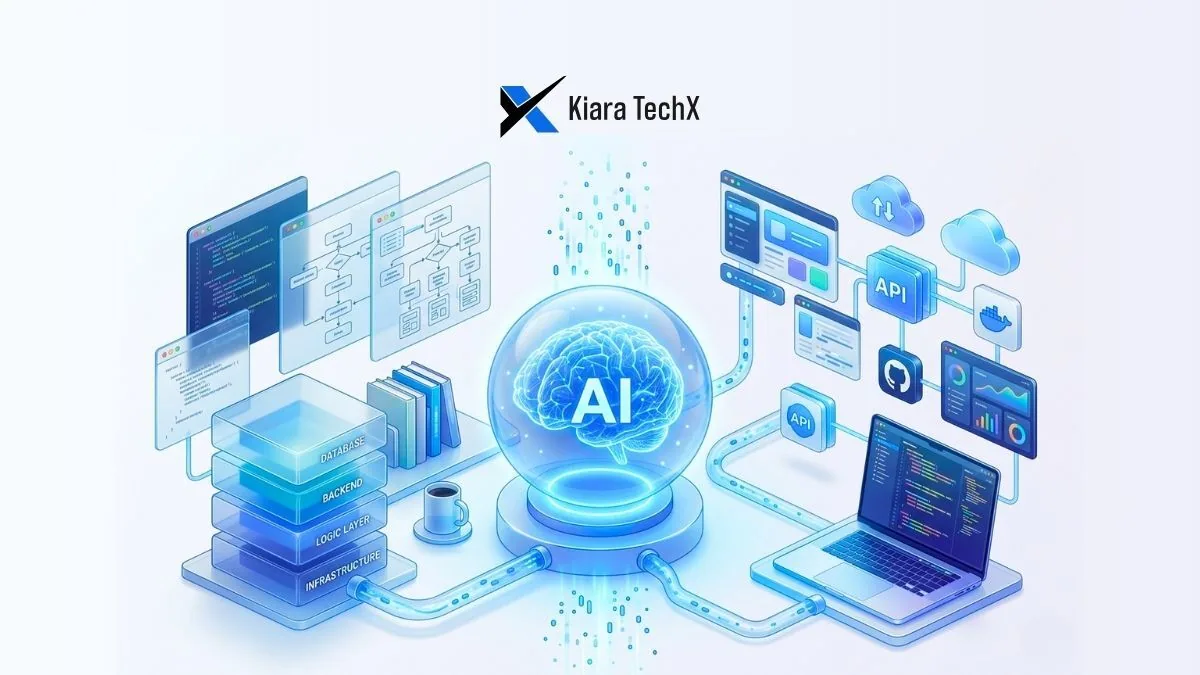
AI thrives on context. In a multi-repo setup, an AI assistant is often limited to the narrow window of the repository it is currently in, often missing how services interact across boundaries. In a monorepo, the AI has a master key to the entire kingdom. It can analyze patterns across your whole infrastructure, understanding the flow of data from the frontend all the way to the backend.
Because the AI can see the previously established patterns across the entire organization, it can suggest more accurate and architecturally sound code. It becomes a bridge between different domains, helping a frontend developer safely navigate backend changes because the AI understands the full end-to-end flow. In this era, the monorepo acts as a massive context window for your specific business logic, making your automated tools more effective with every commit.
Is Your Team Ready for the Shift?
The decision to move to a monorepo should be driven by data, not just a desire for organization. It tends to be a transformative move for organizations that have outgrown simple dependency management and are seeing cross-team coordination become their primary source of lag.
If you find that your teams are constantly blocked by external pull requests or if you are struggling to maintain a consistent design system across five different repositories, the monorepo is likely your best path forward. While the initial migration requires an investment in CI/CD and internal documentation, the long-term payoff is a more cohesive and agile engineering culture.
It is about trading the management of many small, disconnected problems for the management of one larger, more predictable system. For teams at scale, that is almost always a winning trade.
The Kiara TechX Perspective
At Kiara TechX, we believe that architecture should follow organizational maturity. We have helped numerous partners navigate the transition to monorepo structures, ensuring that the move actually results in higher velocity rather than just a larger git clone. Our approach is pragmatic: we focus on creating a seamless Developer Experience (DX) that prioritizes speed and clarity.
We help you implement the right tooling to ensure your builds remain fast and your domain boundaries remain respected. We focus on creating paved paths that make the right architectural choice the easiest one for your developers to take. Whether we are helping you optimize your build cache or integrating AI-driven code analysis into your workflow, our goal is to ensure your infrastructure is an asset to your growth.
By centralizing your code, you are organizing your team's collective intelligence. As we have noted in our previous discussions on maximizing developer velocity and optimizing deployment pipelines, the true victory is a cultural shift toward a more open and high-velocity engineering organization.
Conclusion
A monorepo is a powerful tool for teams that want to scale without losing their agility, providing the unified context that modern AI tools need to be truly effective. By choosing the right moment to centralize, you enable your engineers to spend less time managing repos and more time building value.
Ready to evaluate if a monorepo is the right move for your current stage of growth? Reach out to the Kiara TechX team today and let us help you build a roadmap for a more unified architecture.