Most developers would rather perform a manual registry edit on a production server than hear the sentence:
"We need to switch from NoSQL to Relational."
It's the ultimate momentum killer.
Earlier, migrating an almost production-ready project from MongoDB to PostgreSQL could take several weeks. Developers had to map schemas, organize data properly, and endure late-night debugging sessions chasing down lost BSON types.
But last week our team didn't run a marathon.
We took a shortcut that felt like a superpower.
We migrated a production-ready project, integrated a new ORM, and cleared every single linting error in less time than it takes to brew a few pots of coffee.
We didn't just "use AI." We designed Agentic Workflows that turned what is usually a month-long engineering task into about 90 minutes of active work and a 36-hour total transformation.
And here's the uncomfortable truth many developers are beginning to realize in 2026:
If you are still manually refactoring everything line-by-line, you aren't just working hard - you're quietly falling behind.
The Myth of the "One-Shot" AI Miracle
We often see viral posts where someone claims they generated an entire application with a single prompt. It makes great content, but real production environments rarely work like that.
Complex systems don't work well with unclear instructions.
When our team decided to move to PostgreSQL, we didn't simply tell an AI to "change the database."
Instead, we treated the AI like a high-level architect, not just a code generator.
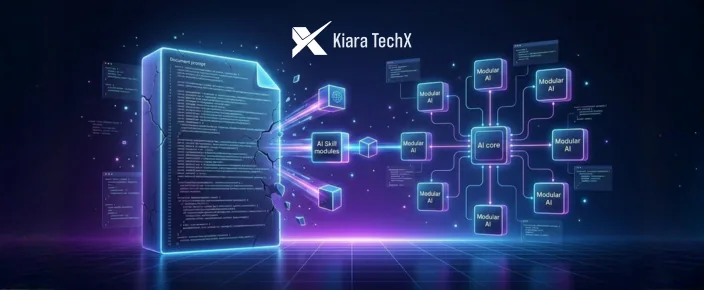
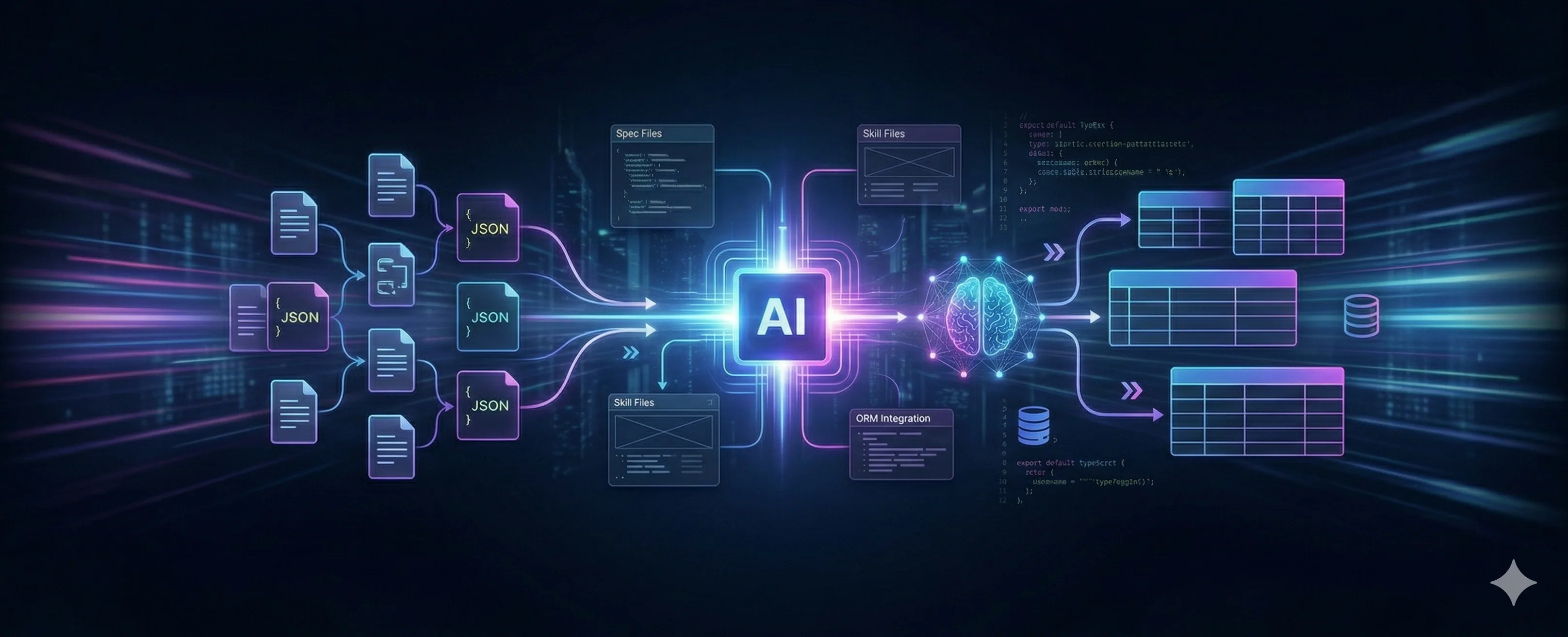
The breakthrough came from using Skill Files - structured context modules sourced from proven GitHub repositories.
By loading a PostgreSQL skill file into GitHub Copilot running Claude Sonnet 4.6, the agent already had the domain knowledge it needed before it even started analyzing the codebase.
Skill Files act like reusable knowledge modules. Rather than relying only on generic model knowledge, they preload the agent with:
- Best practices
- Migration patterns
- Architectural constraints
- Dependency strategies
This means the AI begins the task with the right context already loaded.
Which raises an interesting question:
What if the most valuable part of your codebase isn't the code itself - but the instructions you give the machine to rewrite it?
Spec Files: The Blueprint Before the Bulldozer
Before touching a single line of production code, we asked the agent to generate Spec Files (.md).
These were not code files - they were architectural blueprints.
Instead of jumping straight into refactoring, the agent first documented the entire migration plan. The spec described:
- Which MongoDB dependencies needed to be removed
- How collections should translate into relational tables
- What the PostgreSQL schema would look like
- What services and data access layers needed to change
By forcing the agent to document its intent first, the migration stopped being an AI guessing game and became a planned transformation.
In simple terms:
The agent had to show the plan before executing the work.
The result was a controlled migration instead of a chaotic rewrite.
Parallel Processing: Human Strategy vs Agent Execution
While the agent handled the base migration work, our team hit an important architectural decision point: choosing the ORM.
The decision came down to:
- TypeORM
- Prisma
This is not the kind of choice you blindly delegate to AI. Architectural decisions require human judgment, long-term thinking, and awareness of ecosystem trends.
While the agent executed the migration tasks, we used the saved time to research the ORM ecosystem.
That's when we discovered that the November 2025 Prisma release was a major leap forward.
The update introduced:
- Much faster query execution
- A smaller package footprint
- A significantly improved developer experience
At that point, the decision became obvious.
This is where Agentic workflows create real competitive advantage.
While your digital teammate handles repetitive engineering work, you focus on strategic decisions that actually shape the architecture.
The Overnight Sprint: 98% Accuracy While We Slept
Once Prisma was selected, we prepared a precise prompt with the updated schema requirements and handed the job back to the agent.
Then we went to sleep.
When we opened the project the next morning, the system wasn't just partially converted - it had been systematically transformed.
The agent had already:
- Initialized Prisma
- Generated the Prisma schema
- Migrated raw PostgreSQL queries into Prisma services
- Replaced MongoDB access layers
- Resolved strict TypeScript type issues
- Fixed all ESLint errors
Naturally, we expected the build to explode.
You know the moment - when you run the build command and prepare yourself for a wall of red error messages.
Instead, something unexpected happened:
A clean green checkmark.
Zero build errors.
Context Is the New Engineering Currency
The reason this entire process worked - saving nearly a month of engineering effort - came down to a mindset shift.
We stopped treating AI like a search engine and started treating it like an execution engine.
When you provide an agent with structured context through Skill Files and Spec Files, you give it something incredibly powerful:
A high-definition map of the problem space.
Without context, AI is wandering in the dark and often produces hallucinated code.
With the right context, however, the agent becomes far more precise and reliable.
Even the workflow design mattered.
Instead of doing everything in one long conversation, we split the work into separate tasks:
- Task 1 - Database migration
- Task 2 - ORM integration
This prevented the agent from reprocessing unnecessary context and reduced token usage while improving accuracy.
The result:
- Faster workflow
- More reliable output
- Better cost efficiency
The Real Shift Happening in Software Engineering
AI isn't here to replace developers - it's here to replace their to-do lists.
The engineers who will dominate the next decade won't be the ones typing the most lines of code.
They will be the ones who understand how to:
- Orchestrate intelligent systems
- Use AI for repetitive work
- Focus on architecture and strategy
And here's the uncomfortable truth:
If a tool exists that can make your output 20× faster and you refuse to use it, you aren't being "careful." You're becoming the bottleneck.
The future of development isn't just about writing software anymore.
It's about designing systems that:
- Write
- Refactor
- Evolve
software alongside you.