We have all been there: a three-week sprint ends with a demo that makes the Product Manager tilt their head in confusion. You followed the Jira ticket to the letter. The code is clean, the tests pass, and the architecture is solid. Yet, the feature doesn't actually solve the problem. Somewhere between the initial brainstorming session and the final git push, the "intent" evaporated.
The traditional cycle of "vague ticket → developer interpretation → code → feedback → rework" is the single greatest tax on modern engineering teams. We’ve tried to fix it with more meetings, more documentation, and more rigorous PR reviews, but the root cause remains: we are still treating code as the primary source of truth rather than the specification it’s supposed to implement.
What is Spec-Based Development?
Spec-Based Development flips the traditional script. In a code-first or ticket-driven world, the code is the artifact, and the documentation is an afterthought. In Spec-Based Development, the Specification is the primary artifact. The spec is a rigorous, high-fidelity document - written in structured natural language or a modeling language - that defines the behavior, constraints, and interfaces of a system before a single line of logic is written.
Unlike a loose Jira story, a spec in this paradigm is "computable." It is detailed enough that another human, or increasingly an AI, can understand the exact requirements without making assumptions. While setting up your framework is crucial, the real challenge is ensuring that the spec remains the "Source of Truth" throughout the lifecycle.
Where AI Changes the Math
Until recently, Spec-Based Development was considered "ivory tower" engineering - great in theory, but too slow for the fast-moving world of SaaS. Writing a 20-page spec for a microservice felt like a bottleneck. AI has shattered that constraint. Large Language Models (LLMs) excel at two things: translating high-level intent into structured formats and generating code from those structures.
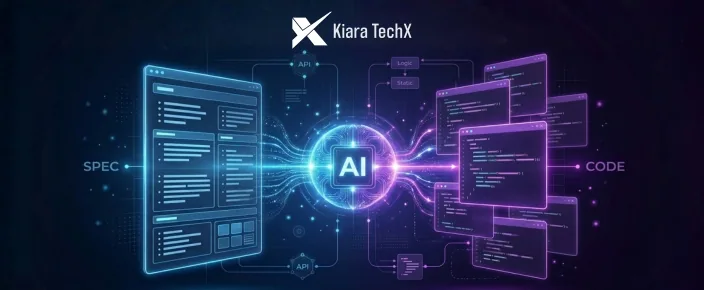
AI doesn't just "write code" anymore; it acts as a compiler for your intentions. When you provide an LLM with a robust specification, it can:
- Interpret Constraints: Recognize that a "user must be authenticated" implies specific middleware and error handling.
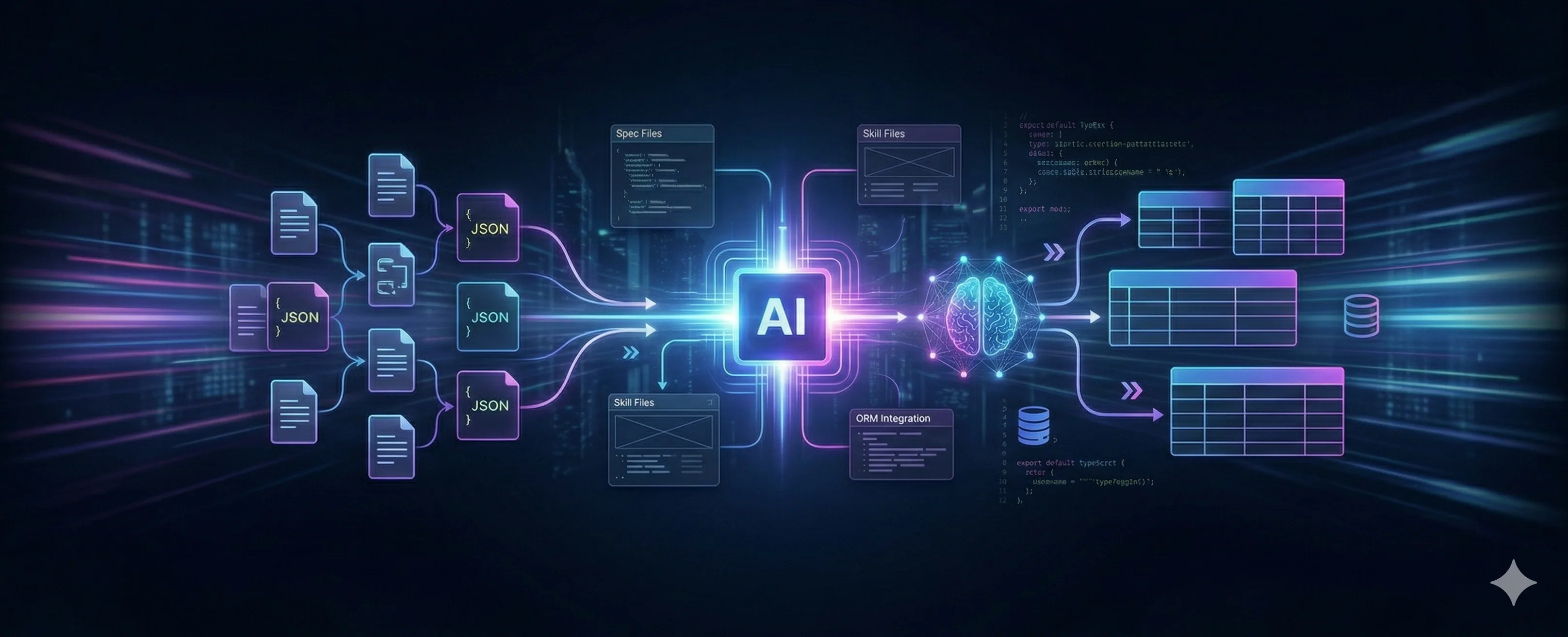
- Generate Boilerplate: Instantly produce the API routes, data models, and types that match the spec.
- Validate Logic: Identify contradictions in your spec before you build them (e.g., "You requested a unique email constraint but didn't define a conflict resolution strategy").
The End-to-End Workflow
Transitioning to Spec-Based Development with AI involves a disciplined four-step loop.
1.Authoring the "High-Fidelity" Spec
A good spec isn't a paragraph; it’s a blueprint. It defines the "What" and the "Why," leaving the "How" to the AI. A high-fidelity spec includes the data schema, API contract (OpenAPI/Swagger), edge cases (e.g., what happens if the database times out?), and security requirements.
2.The AI Synthesis Phase
You feed this spec into an AI-driven development tool or an LLM with a specific system prompt. Instead of saying "Write a login page," you provide the Markdown spec. The AI then generates the foundational code, including the directory structure, configuration files, and unit tests.
3.Verification and Iteration
The developer's role shifts from "writer" to "editor." You review the generated code against the spec. If the AI missed a requirement, you don't just fix the code; you update the spec and re-run the generation. This ensures the documentation never drifts from the implementation.
4. Validation
Finally, you run automated tests - often also generated from the spec - to ensure the output meets the requirements. This creates a closed loop where the spec is the judge, jury, and executioner of the feature’s success.
A Practical Example: The Rate-Limiter Service
Imagine you need to build a rate-limiting service for an internal API.
- The Spec: Defines a Redis-backed service, a limit of 100 requests per minute per API key, and a 429 status code return. It specifies the need for a "sliding window" algorithm.
- The AI Output: The LLM generates the Go or TypeScript logic, the Redis connection logic, and the unit tests that simulate 101 requests to verify the 429 error.
- The Result: What would typically take a developer half a day to research, scaffold, and test is now completed in 15 minutes of spec writing and 2 minutes of generation.
The Real-World Benefits
Why bother changing how you work? The rewards are tangible for both leadership and individual contributors:
- Zero Ambiguity: When the spec is the source of truth, "I thought you meant X" disappears from the vocabulary.
- Compounded Velocity: AI-generated code from specs is 80-90% correct on the first pass. This eliminates the "blank page" problem and allows engineers to focus on complex logic rather than syntax.
- Perfect Alignment: Stakeholders can read a spec and agree on the logic before expensive engineering hours are spent.
The Honest Challenges
It’s not all magic. Spec-Based Development with AI has steep requirements. If your spec is garbage, the AI will generate highly efficient garbage.
- Spec Quality is King: This requires a high level of technical writing skill. Engineers who struggle to describe their thoughts clearly will find Spec-Based Development frustrating.
- Hallucinations: AI can still invent libraries or suggest deprecated methods. Human oversight is mandatory.
- Tooling Gaps: We are still in the early days of "Spec-to-Code" IDE integrations that feel seamless.
Best Practices for Spec-Driven Teams
To succeed, you must treat your specifications like code.
- Use Markdown or YAML: Keep specs in version control (Git) alongside the code.
- Prompt for Structures, Not Snippets: Ask the AI to "Build the project structure based on this spec," rather than asking for one function at a time.
- Review the Spec, Not Just the PR: The most important review happens at the design phase.
- Know When to Stop: Don't use Spec-Based Development for UI/UX "vibe" checks. Use it for logic, data, and backend infrastructure where definitions are rigid.
The Kiara TechX Perspective
At Kiara TechX, we view AI not as a replacement for engineering talent, but as a force multiplier for engineering intent. We believe the future of software isn't "No-Code," but "High-Spec." Our internal frameworks are built on the principle that the better we define a problem, the faster our AI-augmented workflows can solve it. We focus on building "living specs" that evolve with the product, ensuring that our technical debt stays low and our deployment velocity stays high.
The Road Ahead: Executable Intent
In the next few years, we will likely see "Executable Specifications." We will move away from manual code generation toward systems where the spec is the runtime instruction. The gap between a thought and a deployed feature is shrinking every day.
The shift toward Spec-Based Development is more than a change in tooling; it’s a change in mindset. It asks us to stop being "coders" and start being "architects of intent."
Ready to modernize your engineering workflow? Reach out to the Kiara TechX team today to learn how we can help your team implement AI-driven spec workflows that actually scale.