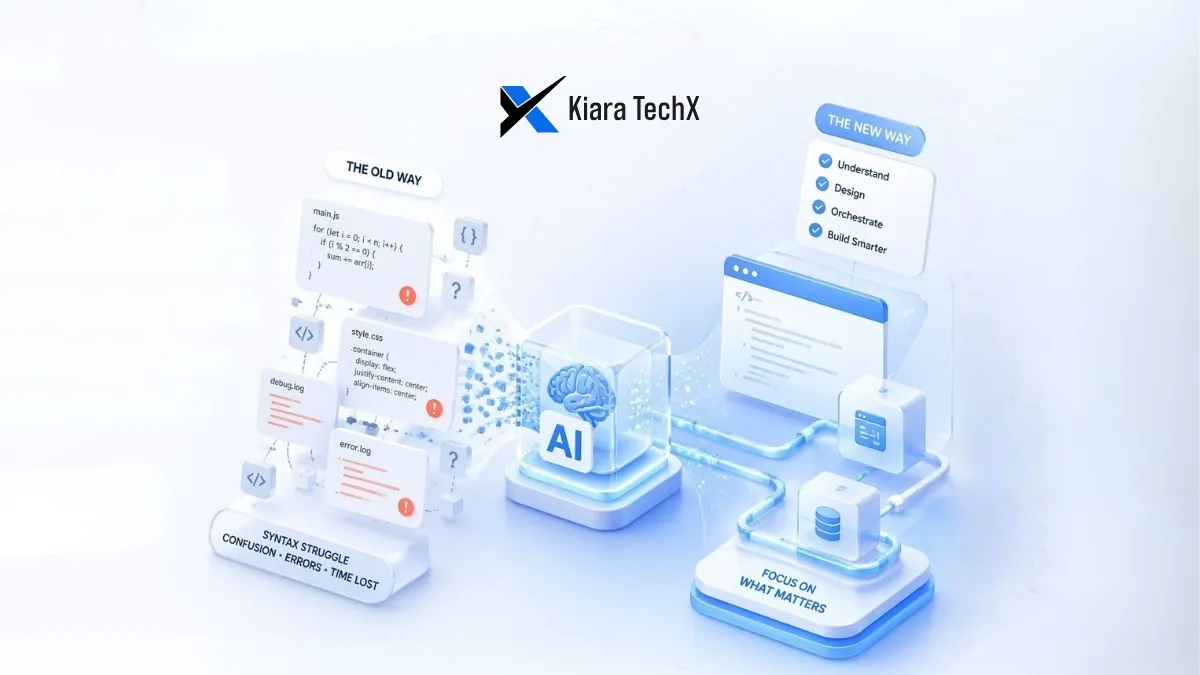
Remember when the ultimate badge of honor for a programmer was a dog-eared, 600-page O’Reilly book with a charcoal-sketched animal on the cover? If you’re a Millennial dev, you probably still have a "camel" or a "rhino" sitting on a shelf somewhere, a physical monument to the weeks you spent mastering Perl or JavaScript before you ever dared to hit "deploy." Contrast that with a modern Gen Z workstation: triple monitors, a Discord community humming in the background, and an AI pair programmer suggesting the next ten lines of a React component before the developer even finishes the thought.
We are witnessing a profound generational pivot in how humans learn to talk to machines. It isn’t just about the tools; it’s about the very architecture of the developer's mind. While one generation was forged in the fires of "slow-burn" foundational theory, the other is being raised in a high-velocity ecosystem of just-in-time learning. Both approaches are valid, yet they produce fundamentally different types of creators.
The Millennial Blueprint: Precision and Patience
For those who started coding in the 2000s or early 2010s, the entry barrier was high and the feedback loop was long. You didn't just "google it" because Stack Overflow was in its infancy and YouTube was for cat videos, not compiler errors. Learning was a linear, academic exercise. You likely started with C or Java, languages that forced you to understand memory management, pointers, and strict object-oriented principles before you could even print "Hello World" to a console.
This era bred a "bottom-up" mentality. You learned the why before the how. There was a certain reverence for the "Deep Magic" of computer science - data structures, algorithms, and system architecture. Because documentation was often static and hard to find, Millennial developers developed a high tolerance for frustration and a forensic approach to debugging. You didn't just fix a bug; you understood the mechanical failure that caused it.
While setting up your framework with this level of precision is crucial, the modern landscape often demands a different kind of speed.
The Gen Z Sprint: Agility and Outcomes
Enter the "Digital Natives." For a Gen Z developer starting today, the "textbook-first" model feels like trying to learn to drive by reading a manual on internal combustion engines. They are "top-down" learners. They want to see a button on a screen, make it do something, and then work backward to understand the logic.
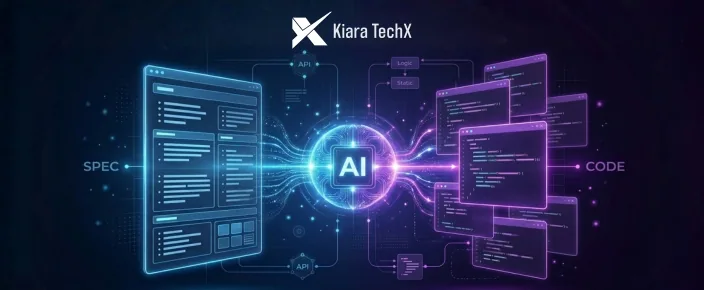
Their ecosystem is collaborative and ephemeral. If they hit a snag, they don't consult a 2004 edition of a C++ guide; they drop a snippet into a Discord server or ask a Large Language Model (LLM) to explain the error. This "just-in-time" learning allows them to skip the "boring stuff" and move straight to frameworks like Next.js or Tailwind CSS. They are masters of the "Minimum Viable Product" (MVP) mindset, valuing shipping and iteration over theoretical perfection.
This isn't laziness - it’s adaptation. In a world where libraries change every six months, spending two years mastering a single language’s nuances can feel like a strategic error. Gen Z developers treat code as a tool for expression rather than a sacred craft, leading to a generation of "Product-First" engineers who are incredibly adept at navigating complexity and integrating disparate APIs at lightning speed.
Bridge the Gap: The Deep vs. The Fast
The tension between these two cohorts usually surfaces during code reviews. The Millennial might look at a Gen Z pull request and worry about the lack of optimization or the reliance on heavy third-party libraries. The Gen Z developer might look at a Millennial's architecture and wonder why it took three weeks to build something that could have been prototyped in three days.
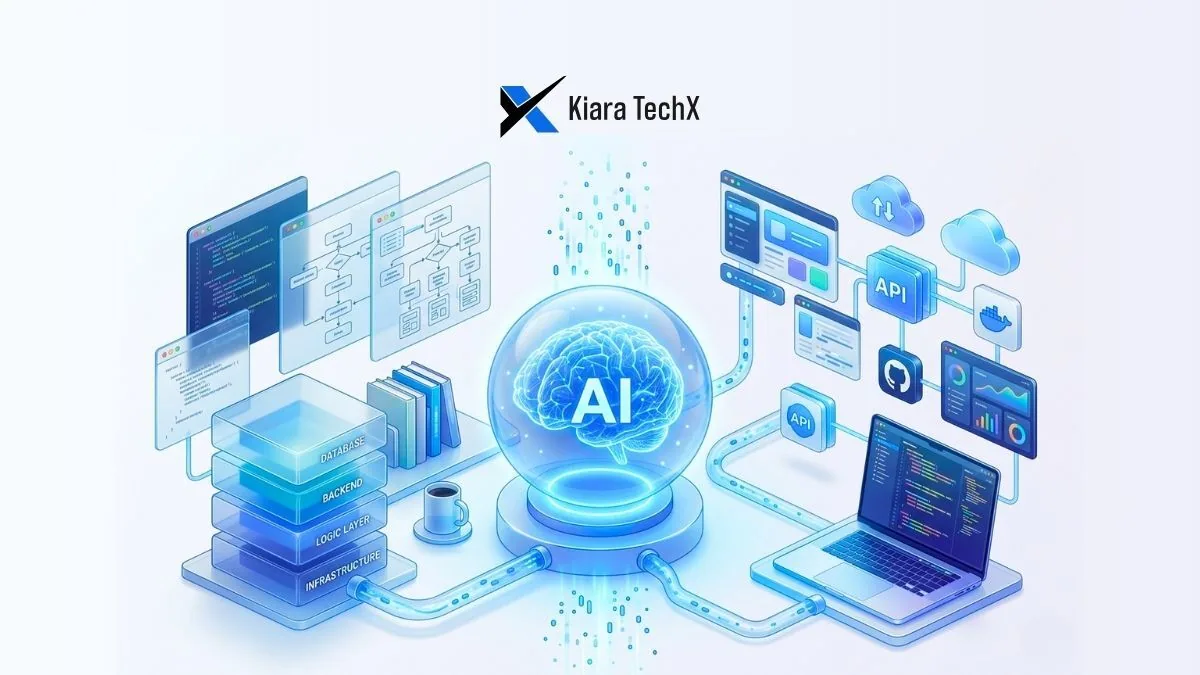
The reality is that the industry needs both. We need the "Precision Engineers" who ensure the database doesn't melt under load and the "Agile Creators" who can pivot a user interface based on real-time feedback. The most successful teams today are those that blend these generational superpowers: using Millennial wisdom to guard the "core" and Gen Z energy to drive the "edge."
The Kiara TechX Perspective: Harmonizing the Talent Stack
At Kiara TechX, we don't view the "textbook" vs. "tutorial" debate as a binary choice. We believe that the future of B2B technology lies in Hybrid Intelligence. Our internal culture encourages our senior architects to mentor junior devs in the "Deep Magic" of systems, while our younger talent pushes us to adopt the latest AI-driven workflows and rapid prototyping tools.
We approach development as a continuous conversation between these two worlds. Whether we are building a complex enterprise backend or a slick, responsive frontend, we ensure that every line of code benefits from both rigorous architectural scrutiny and modern, iterative agility. By honoring the "slow burn" and the "rapid sprint" simultaneously, we deliver solutions that are both stable and innovative.
The code hasn't changed, but our relationship with it has. Whether you learned from an O'Reilly book or a 10-minute YouTube crash course, the goal remains the same: building something that matters.
Ready to see how a multi-generational, expert team can accelerate your next project? Connect with the Kiara TechX team today and let’s build the future together.