Remember when the most stressful part of your week was a missing semicolon that took four hours to find? We used to joke about it, but those four hours were actually a masterclass in logic. You weren't just looking for a character; you were mentally mapping the entire execution flow of your application. Today, that friction is vanishing. We are entering the era of "Vibe Coding" - a world where you describe a vibe to an LLM, hit "Apply," and watch the magic happen.
But here is the question that keeps seasoned architects up at night: When we stop wrestling with the code, do we lose the ability to understand it? We are rapidly minting a generation of engineers who are masters of the prompt but strangers to the compiler. If the "vibe" goes wrong and the AI hallucinates a fix that looks correct but fails silently at scale, do we still have the muscle memory to dig through the wreckage?
The Rise of the "Vibe" Over the Logic
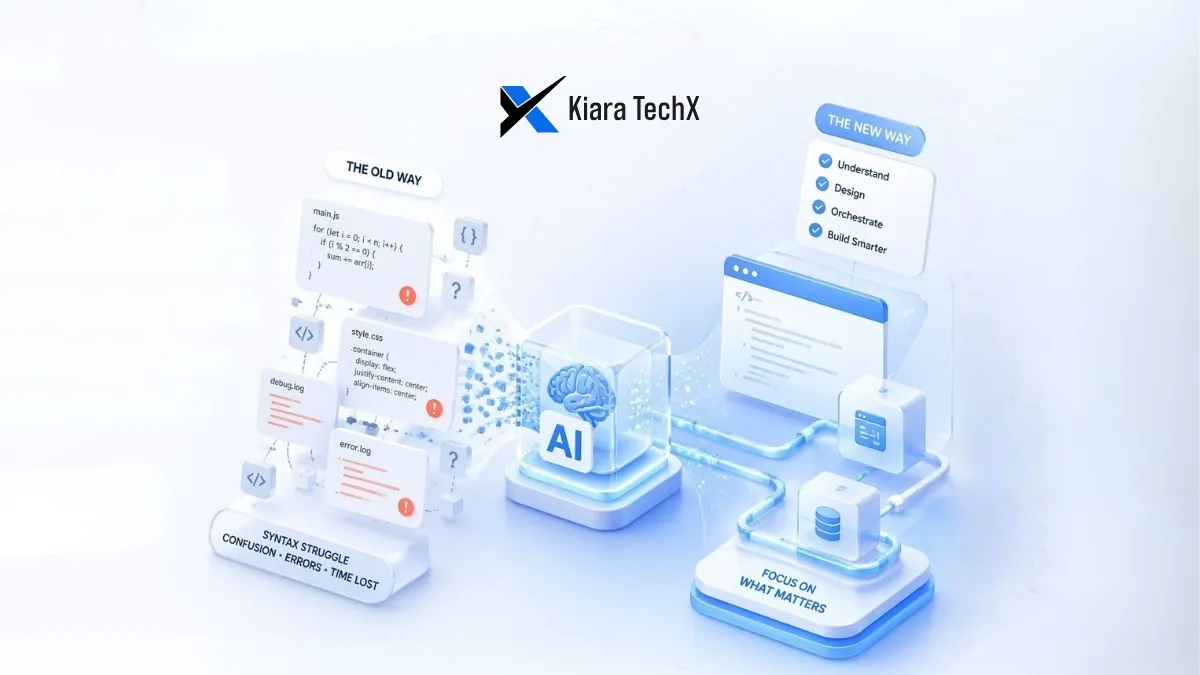
Vibe coding isn't just a trend; it is an addictive shift in the developer experience. It feels like flying. You describe a feature, the AI generates three hundred lines of React, and the UI looks exactly like the Figma file. In this flow state, the traditional cycle of "Write, Fail, Debug, Learn" is replaced by "Describe, Review, Merge."
The problem is that "Review" is becoming the weakest link in the chain. When an AI generates code at 10x the speed of a human, the cognitive load required to truly audit that code is immense. Most developers, under the pressure of tight sprints, perform a visual check. If the button clicks and the data shows up, the vibe is right. However, the logic underneath might be a ticking time box of technical debt, inefficient O(n^2) loops, or security vulnerabilities that don't manifest until the first 10,000 users hit the platform.
The Vanishing Art of the Deep Debug
Debugging is more than just fixing bugs; it is the primary way we learn how systems actually work. It forces you to understand memory management, state transitions, and the quirks of the underlying framework. When the AI handles the heavy lifting, that deep systemic understanding begins to atrophy.
We are seeing a growing skill gap where junior engineers can build complex prototypes in hours but get completely paralyzed when a production environment throws a "Null Pointer Exception" that wasn't covered in the AI's training data. While leveraging automated tools is essential for modern velocity, relying on them as a crutch rather than a tool creates a fragile engineering culture.
Without the struggle of the debug, the engineer becomes a script supervisor rather than a director. They know what the scene should look like, but they don't know how to fix the lighting when the bulbs blow out.
When the Hallucination Hits the Fan
The danger of Vibe Coding isn't just laziness; it’s the confidence of the AI. LLMs are designed to be helpful, not necessarily accurate. They will provide a solution that looks syntactically perfect even if the logic is fundamentally flawed. In a "vibe-first" workflow, the developer often lacks the skepticism needed to catch these errors.
Consider a scenario where an AI suggests a deprecated library for a critical payment gateway integration. It "works" in the dev environment, but the lack of security patches leads to a breach six months later. If the engineer didn't write the code and doesn't understand the library's lifecycle, they won't even know to look for the risk. We are trading long-term stability for short-term "vibes," and the bill will eventually come due.
The Balanced AI Usage Framework
We shouldn't throw the baby out with the bathwater. AI-augmented coding is the greatest productivity leap in the history of software. The goal isn't to go back to the Stone Age of manual documentation searches; it’s to build a framework for "Informed Vibe Coding."
- The "Why" Before the "What": Before prompting for a solution, the engineer should be able to explain the logic of the solution they expect to see. If you can't describe the logic, you shouldn't be asking the AI to write it.
- Mandatory Manual Audits: Implement a rule where AI-generated blocks over a certain complexity must be manually documented by the engineer in their own words. This forces a cognitive "check-in."
- The 10% Rule: Spend 10% of your development time intentionally debugging without AI. Use breakpoints, logs, and stack traces. Keep those muscles sharp.
The goal is to maintain the "Engineer's Intuition" - that gut feeling that tells you something about a code block is just slightly off, even if it passes the tests.
How Kiara TechX Approaches This
At Kiara TechX, we don't fear AI; we embrace it as a high-performance engine. However, we also know that an engine is useless without a skilled driver who knows what’s happening under the hood. We view Vibe Coding as a collaborative dance between human intuition and machine speed.
Our internal philosophy centers on "Accountable Engineering." We provide our teams with the best AI tools on the market, but we pair them with rigorous architectural reviews and a culture of mentorship that prioritizes fundamental computer science principles. We believe that the best engineers of the future won't be the ones who prompt the best, but the ones who can deconstruct an AI’s output and optimize it for the real world.
We encourage our partners to move beyond the "vibe" and focus on the "verify." By integrating AI into a structured, disciplined development lifecycle, we ensure that the speed of innovation never compromises the integrity of the system.
The Future: Vibe Logic, Not Just Vibe Syntax
The future of engineering is bright, provided we don't lose our curiosity. The "Vibe" should be the starting point - the spark of creativity that allows us to build faster and dream bigger. But the "Code" must remain our craft. We must continue to be the masters of the logic, the hunters of the bugs, and the architects of the invisible.
If we can bridge the gap between the speed of the AI and the skepticism of the human mind, we won't just create a generation of engineers who can't debug - we will create a generation of "Super-Engineers" who can build the impossible.
Don't let your codebase become a black box of vibes.
Ready to build software that is both fast and fundamentally sound? Reach out to the Kiara TechX team today to learn how we balance cutting-edge AI velocity with enterprise-grade engineering rig